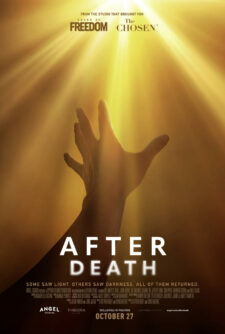
AFTER DEATH
Death is not the end — and this documentary makes you feel it.
Should You See It?
Here is the decision. AFTER DEATH takes one of the biggest questions a human being can ask — what happens when we die? — and answers it with scientists, researchers, and ordinary people who say they have been to the other side and back. It is fascinating, inspiring, and built with real cinematic care.
What sets it apart is its honesty and its heart. It explores the scientific evidence carefully, lets the experts say plainly what can and can't be confirmed, and then turns to the people themselves — including those who met Jesus. It never twists their stories into strange theology. It simply lets them testify, and points you toward hope, love, purpose, and life.
So: if you want a movie that makes you think seriously about eternity and leaves you encouraged rather than frightened, see it. Bring the older kids. This one is worth the trip.
The Story
NO SPOILERS — WE KEEP THE SURPRISESWhat really happens in the moments after death? AFTER DEATH gathers scientists, researchers, and men and women who say they have experienced it firsthand.
The film opens with a doctor's in-depth study of people who reported watching their own operations from outside their bodies while unconscious — and describing them accurately. From there it widens: researchers note how strikingly similar these near-death experiences are, and the people themselves begin to tell their stories. Some traveled toward beauty and light. Others did not. With vivid special effects bringing their accounts to life, the film asks you to consider what waits beyond.
Is It Any Good?
Four stars, and they're earned. This is a documentary that plays like an experience. The filmmakers don't settle for interviews in dim rooms — they recreate the most notable accounts and punctuate them with wonderful special effects, turning testimony into something you feel on the big screen.
It's also intellectually careful, which is what makes it credible. The film opens with hard science: Dr. Michael Sabom's study of out-of-body reports that could be checked against what actually happened in operating rooms. It's candid that other experiences — tunnels, reunions with the dead, encounters with Jesus — can't be scientifically confirmed because they're too subjective. That restraint is a strength. The second half goes deeper into the spiritual, and the film handles even the harrowing accounts with clarity and hope. Fascinating and inspiring from start to finish.
The Worldview
AFTER DEATH carries a strong Christian worldview, and it wears it well. The film promotes hope, love, purpose, meaning, and life — and again and again it returns to Jesus helping people, whether in beauty or in terror. A clear Gospel message is given. Best of all, it steers away from the danger such films often fall into: it never turns any single near-death experience into a fixed theological doctrine, and it contains no heretical or aberrant teachings about Jesus, salvation, Heaven, or Hell.
It's honest about the darkness, too. Most people describe overwhelming health, beauty, hope, and love — but the film notes that 27 percent report negative, harrowing experiences. One man describes being shoved down a dark tunnel by gray figures with malicious intent, until he cried out to the Jesus of his youth and was carried to a heavenly place and told to return and love others. His account carries a sorrow the film doesn't hide: his own family has so far rejected that message of love.
Above everything, the movie urges you to stop and consider eternity, and reminds you that "what we say and do really matters." Scripture says the same longing runs through every human heart: God "has put eternity into man's heart" (Ecclesiastes 3:11).
The Content Guide
The specifics — spoilers included by nature — so you can judge for your own family.
Very strong Christian references to near death experiences, with many positive statements of Jesus helping people and a Gospel message is given, plus love, hope, purpose, meaning, and life are promoted
Three “h” obscenities but no profanities
Discussion of car wrecks and injuries, plus some images of being people operated upon and getting shocked by a defibrillator
No sex
No nudity
No alcohol use
No smoking or drug use;
Man relates how his family rejected him when he returned from a new death experience and talked about what Jesus told him about the importance of love.
Talk About It
Questions for the drive home, the dinner table, or the youth group.
The film urges viewers to "stop and consider eternity." When was the last time you honestly did — and what would change if you took eternity as seriously as this movie asks you to?
Ecclesiastes 3:11 · 2 Corinthians 4:18One man cried out to Jesus in the middle of a terrifying experience and was rescued. What does Scripture promise to those who call on the Lord in their darkest moment?
Romans 10:13 · Psalm 34:17The film keeps returning to love, and one man's family rejected the message of love he brought home. Why do people sometimes resist love and truth from those closest to them?
John 1:11 · 1 Corinthians 13The movie says "what we say and do really matters." How should the reality of eternity shape the small choices you make this week?
Matthew 12:36 · Colossians 3:1–4The Final Word
AFTER DEATH is that rare documentary that engages your mind and stirs your heart at once — careful with the science, generous with the stories, and unafraid to point you to Jesus and to eternity. It's beautifully made and built for real conversation afterward. So here is our answer, the same one we opened with: worth the trip. Bring the family, and leave time to talk.