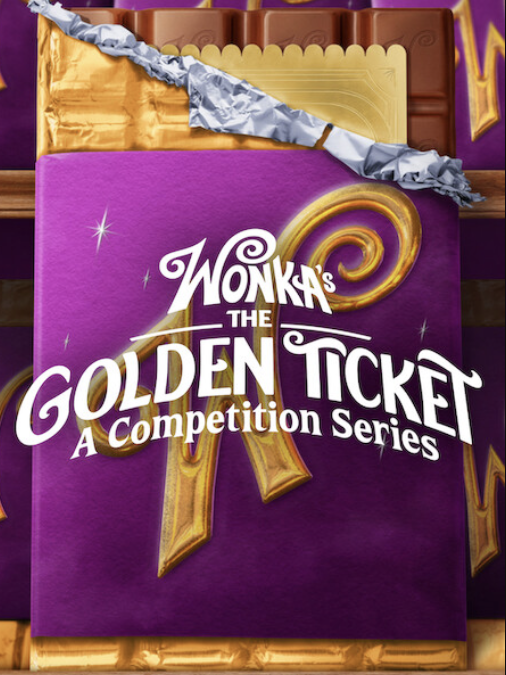
Turning Willy Wonka’s candy factory into a reality competition took more than familiar scenery: the team behind WONKA’S THE GOLDEN TICKET spent months making fantasy-inspired challenges work for real contestants.
“It was like the dream job, but also probably the most pressurizing job I’ve ever taken on because it’s just such a responsibility to get it right,” executive producer and showrunner Emer Harkin told Entertainment Weekly. “Not only are you tasked with creating entertaining, compelling, fun games, but you also have to create in this magical, fantastical world. And that’s a really different sort of discipline to other competition reality shows because you are living in a world that is a little entrenched in fantasy and mysticism and magic.”
The showrunner broke down five challenges that made it to the Netflix reality show, explaining that the team spent 10 months developing ideas, prototypes and tests. The series draws on the 1971 movie WILLY WONKA & THE CHOCOLATE FACTORY, but familiar images did not automatically become usable games.
“We wanted something that was really relatable,” said Harkin.
For Whirl Power, that sensation was dizziness. Contestants stood on spinning platforms while holding a twisting handle that created giant pieces of licorice, turning a candy-factory invention into an endurance test.
Harkin said the team tested the challenge for months, with executives and Netflix participating, but the cast outlasted the trial runs. Some players lasted more than 49 minutes — a reminder that a game’s real drama can begin where its rehearsals end.
Free Bees proved especially tricky. A player had to climb a slippery, uneven ramp to release a teammate trapped behind a giant honeycomb, with real honey mixed with a slime derivative to create the surface.
The challenge was not simply to make everybody slide. Harkin said the team had to balance the ramp’s incline, its undulations and the substance’s viscosity while accounting for contestants of different ages, body types and physical abilities.
Related: WONKA’S THE GOLDEN TICKET: Episode 1.1
The lickable wallpaper, meanwhile, offered a direct callback to the movie. In Lickety Split, contestants licked fruit-covered wallpaper to reveal hidden letters underneath, turning an unusual piece of Wonka’s decor into a competitive task.
Not every beloved idea survived development. Harkin said the team considered games involving fizzy lifting drinks but never felt satisfied with those ideas, so they did not make the cut.
Has Beans took the spectacle in a different direction. Players secretly selected between one and five beans; choosing the highest number without matching another player kept a contestant safe as the elimination game continued.
The tension came from trying to anticipate other people’s choices, not from an elaborate obstacle course. Harkin described a simple setup whose outcome the producers could not predict, even after testing it with groups of different sizes.
WonkaVision 2.0 required another kind of problem-solving: practical illusions that made contestants appear to disappear and move between sets. According to Netflix’s behind-the-scenes explanation, magic consultant Adam Mada designed a fade-box illusion rather than actually shrinking or transporting anyone.
The game-show segments feature hosts Howie Mandel, Nick Cannon and Wayne Brady. Their appearances extend the original movie’s television-room concept into a setting for new competitions, while the illusion had to work for contestants watching in person as well as viewers at home.
Netflix’s cast guide introduces 12 pairs, including parents and children, siblings and longtime friends. Those relationships give the elaborate challenges a human stake: a teammate is not necessarily just another competitor, but someone a player brought along for the adventure.
The nine-episode series is streaming on Netflix, which identifies it as TV-PG in the United States. Netflix also says the production re-created the late actor Gene Wilder’s Wonka voice with his estate’s consent.
The winner’s advertised lifetime supply of money translates to $3 million through an annuity over 30 years, according to Netflix. Behind the candy-colored promise, Harkin’s account reveals the less glamorous ingredient that made the competition possible: repeated testing, followed by contestants doing the unexpected.
Read Next: Gene Wilder’s WILLY WONKA Returns to Screens
Questions or comments? Please write to us here.