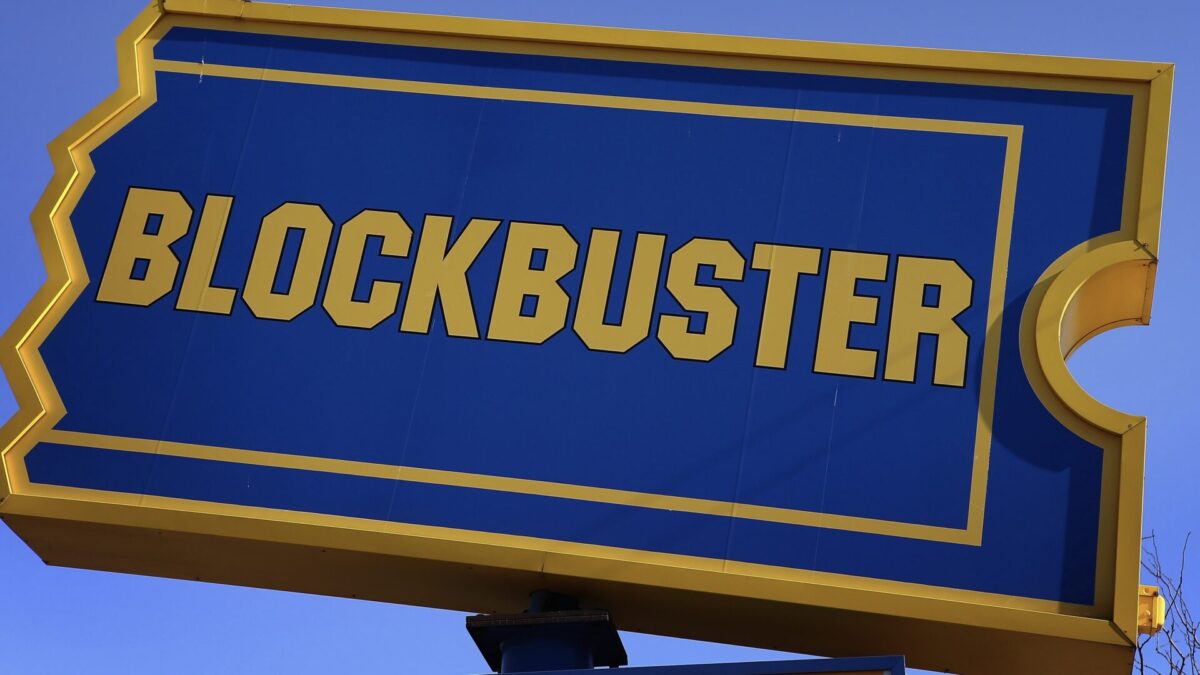
A British web developer has recreated the old Blockbuster video store experience for the streaming era, and the internet cannot stop talking about it.
One viral response to the project summed up its strange appeal: “Technology has finally recreated wandering around for 40 minutes and choosing nothing.”
That’s kind of the point, according to RELEVANT Magazine, which reported on the site earlier this week.
Web developer Oli Evans built Bingebuster.net, a free browser-based tool that turns a person’s streaming subscriptions into a virtual 3D video store. Instead of scrolling endlessly through Netflix or Disney+, users connect their streaming accounts and walk through digital aisles organized into sections like Horror, Sci-fi, Romance, Documentaries, ’90s Classics, New Releases and Staff Picks.
The browsing itself works like Google Street View. Users move down a shelf, pick up a title to see the virtual box art, watch its trailer and click through to whichever streaming service actually carries it. A filter option limits the store to only the services someone already subscribes to, so nobody’s wandering the Romance aisle dreaming about a movie three platforms out of reach.
Bingebuster isn’t Evans’ first pass at digitizing nostalgia. He also built a virtual walkthrough of the famous Criterion Closet and a separate site that archives every Pitchfork album review ever published, according to RELEVANT.
Related: Is Physical Media Better Than Streaming?
The site exploded after the pop-culture outlet Dexerto featured it last week, racking up millions of views across social media before entertainment and tech outlets picked it up too.
What’s driving the appeal isn’t just nostalgia for a chain most of today’s teenagers never set foot in. Streaming promised infinite choice and delivered something closer to decision paralysis: 20 minutes of scrolling three different apps that usually ends with somebody just rewatching an old favorite again. Bingebuster restores something the algorithm quietly took away — the chance to stumble onto a movie instead of being served one.
Movieguide® has tracked this tension for a while now. A January article on the disappearance of physical media noted that streaming licenses can vanish, get altered or lock up entirely depending on where a subscriber happens to live — a point director Christopher Nolan has raised as well, arguing that if a physical disc “is on your shelf, it’s yours,” in a way no digital library ever quite is.
Bingebuster doesn’t solve that ownership problem. It’s still just a slicker window into the same rented libraries. But it does something Movieguide® readers who grew up with a Blockbuster card in their wallet will recognize instantly: it puts the browsing back in the driver’s seat instead of the algorithm.
That matters more than it sounds like for families trying to watch movies with intention rather than whatever autoplay serves up next. A virtual video store won’t replace actual discernment about what belongs in front of your kids. But there’s something worth noting in the fact that, after two decades of every platform racing to make watching faster and smarter, millions of people got genuinely excited about a website built to slow the whole process back down.
Whether Bingebuster becomes anyone’s actual Friday-night ritual is still an open question. For now, it’s a reminder that convenience was never really what people missed about the video store. It was the wandering.
Read Next: Why We All Should Be Concerned About the Death of Physical Media
Questions or comments? Please write to us here.