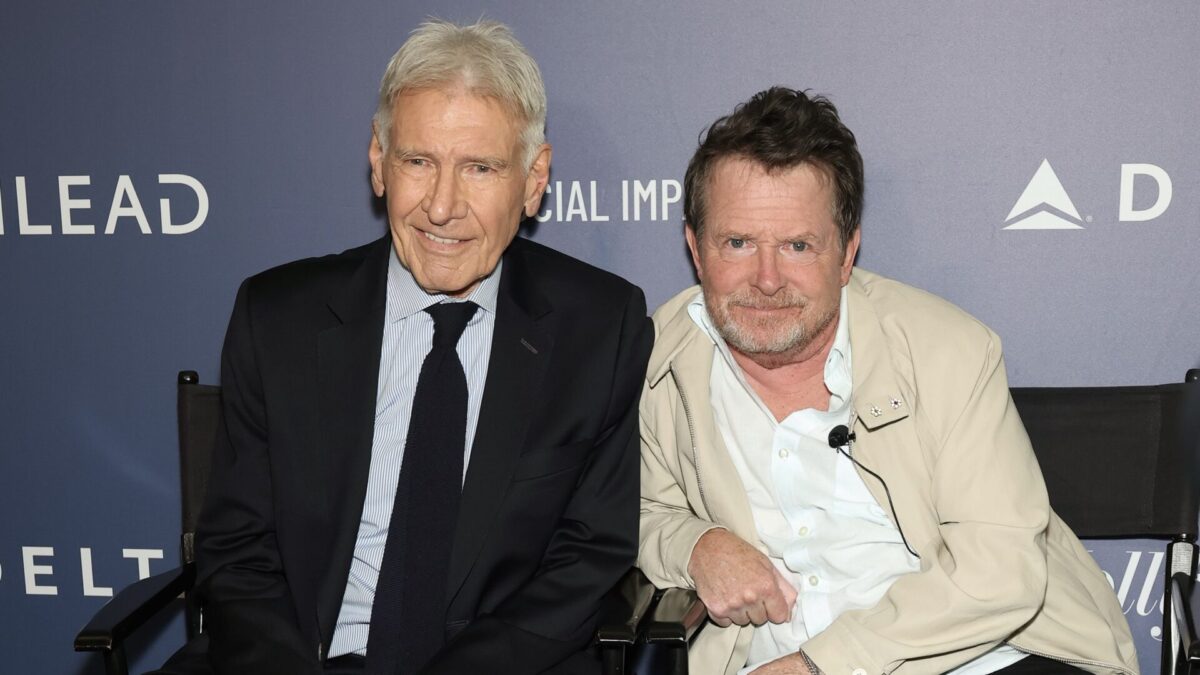
Actor and Parkinson’s advocate Michael J. Fox and actor Harrison Ford have turned one of friendship’s most awkward moments into a funny, tender primer on simply staying close.
“They worry so much about saying the wrong thing that they stop saying anything,” Fox said in the new video. His answer lands because the 102-second exchange never treats friendship as a performance; it makes room for ordinary care, a little discomfort and plenty of dry humor.
The Michael J. Fox Foundation for Parkinson’s Research released “So…Your Friend Has Parkinson’s” on Sept. 2 as the centerpiece of a new awareness campaign. Created with Maximum Effort, the entertainment company helmed by Foundation board member Ryan Reynolds, the campaign asks one practical question: What do you do when a friend tells you they have Parkinson’s?
The two actors sit across from each other in a warm, wood-paneled living room, trading glances before either agrees to begin. Bright orange title cards eventually boil the lesson down to four steps: Don’t make it weird; start simple; help, don’t fix; keep showing up.
“How about, ‘Thanks for telling me,’” Fox suggested when Ford asks what he should say. Fox adds that the moment does not require a grand speech, which suits Ford just fine.
Related: How Michael J. Fox Takes ‘Each Day as It Comes’ Amid Parkinson’s Battle
“Most people’s first instinct is to try and help,” Fox said. He immediately adds a warning not to confuse helping with fixing: Staying present matters more than arriving with an internet cure or trying to manage someone else’s disease.
“Our brand campaign combines humor and compassion to highlight the very serious purpose behind our work,” said Debi Brooks, CEO and co-founder of The Michael J. Fox Foundation. The organization’s 50-person Patient Council offered feedback on the campaign’s early creative direction, helping the team keep the message connected to the real experience of people living with Parkinson’s.
That concern is not a throwaway talking point. The Foundation’s guidance on social connection and Parkinson’s explains that changes in communication and the emotions that can accompany chronic disease may leave both people with Parkinson’s and their loved ones struggling to remain connected.
Fox and Ford already had the chemistry to carry a difficult conversation without turning it heavy. They most recently shared the screen in season three of SHRINKING, where Apple announced Fox as a new addition alongside series star Ford.
Their work also earned fresh recognition. The Television Academy’s 2026 listings name Fox as an Emmy nominee for guest actor for his role as Gerry and Ford as a nominee for supporting actor for his role as Paul.
The spot closes by directing viewers to MichaelJFox.org, where the Foundation offers information about the campaign and ways to support Parkinson’s research. Yet its most immediate request costs nothing: Do not let fear of an imperfect response become an excuse to withdraw.
For families, the campaign’s four steps feel refreshingly familiar: Listen before offering answers, resist the urge to manage another person’s pain and keep showing up. That is neighbor-love in work clothes — quiet, practical and more concerned with presence than performance.
“You want to get lunch?” Fox asked when Ford wonders what the right thing to say might be. Sometimes friendship does not need a cure, a lecture or a polished response. It just needs an open chair at the table.
Read Next: Michael J. Fox Has Still Got It: Starring in SHRINKING Season 4
Questions or comments? Please write to us here.