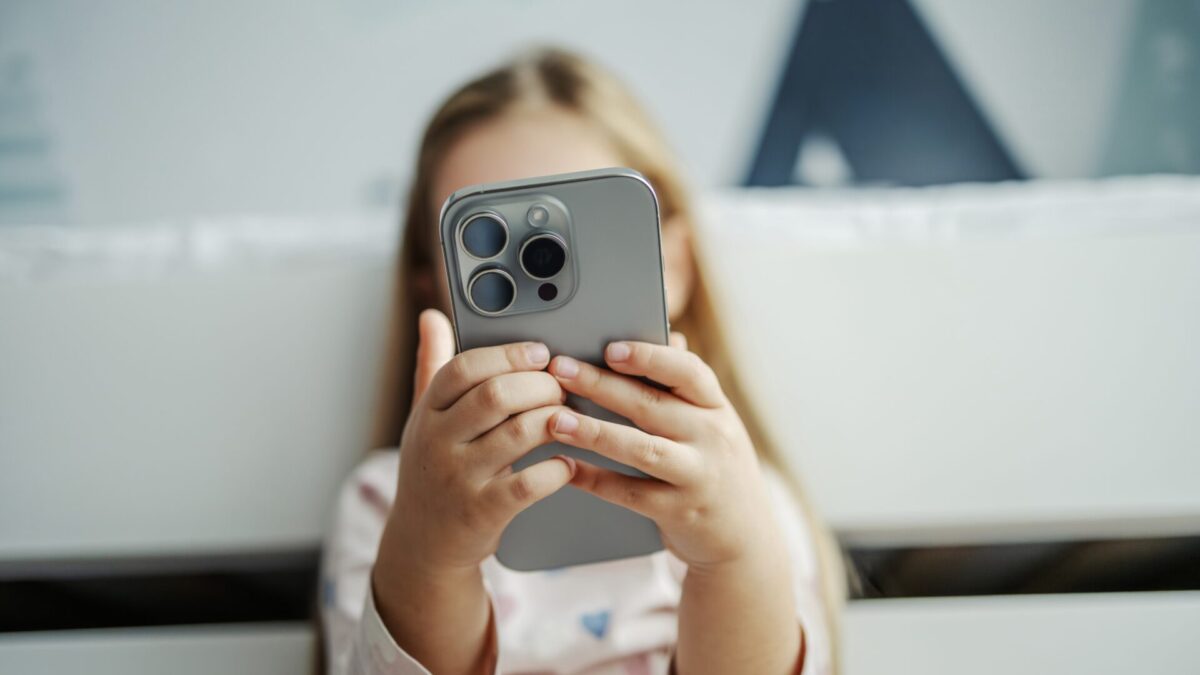
Social psychologist and New York University Stern School of Business professor Jonathan Haidt wants parents to ask a new screen-time question: Is their child treating a chatbot like a friend?
“Talk to your kids about bots. Explain the sycophancy, the lies, the discrepancy from real-life relationships,” Haidt wrote in his Sept. 29 Instagram post.
Haidt, the author of The Anxious Generation, warned that children can form attachments to artificial companions that shower them with attention and approval. His concern goes beyond how many minutes children spend online to the emotional relationships they may develop there.
His work at NYU focuses in part on social media’s effects on mental health, and he advocates restoring childhood opportunities for play, independence and real-world connection. In this post, he turned that focus toward conversations with artificial intelligence.
Rather than leave parents with another digital worry, Haidt offered three steps: explain how bots differ from people, limit touch-screen device time and ask schools how they are limiting AI. He also urged parents to set boundaries around school-issued Chromebooks when those devices come home.
“Watching TV or movies together as a family is good,” he wrote. That distinction leaves room for shared entertainment without treating every encounter with a screen as the same experience.
Related: Social Psychologist Issues Dire Warning to Today’s Parents
Haidt also warned that the relief AI companions offer lonely children may not last. Emerging research raises concerns about those relationships, though it does not establish that every chatbot interaction causes harm or settle the long-term effects.
A University of North Carolina at Chapel Hill research team examined 2,342 students in grades six through eight across 22 middle schools in one southeastern state. Researchers collected surveys in December 2025 and again in April and May 2026, roughly five months later.
Students who reported stronger emotional intimacy and companionship with AI initially tended to report greater loneliness at school later. The researchers also found associations between AI use and subsequent social anxiety and depressive symptoms.
Those findings need careful handling: The manuscript remains under review, the students reported their own experiences and the study did not identify which AI platforms they used. The authors explicitly caution that their observational findings do not establish causation or necessarily apply to children in other regions.
The results were not uniformly negative, either. After accounting for other factors, valuing AI’s nonjudgmental responses predicted less school loneliness, a finding the authors urge readers to interpret cautiously rather than treat as a proven benefit.
The American Academy of Pediatrics distinguishes general-purpose AI tools from companions designed to build ongoing emotional connections. Its guidance notes possible educational uses while warning about overreliance, privacy risks and children withdrawing from face-to-face relationships.
For parents, the academy recommends curious, nonjudgmental conversations, protective privacy settings and clear expectations in a family media plan. It also advises watching for changes in sleep, activities or behavior, including choosing an AI application over other interests and responsibilities.
A good place to start is asking a child to show how a chatbot works and explain how the conversation makes them feel. Parents can pair that conversation with something no app can supply: their own attention, shared time and help building friendships beyond the screen.
Read Next: Why One Social Psychologist Calls Big Tech ‘Drug Dealers’
Questions or comments? Please write to us here.