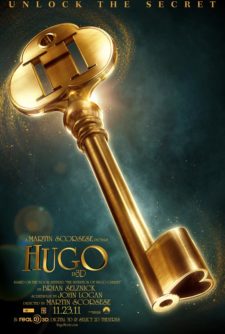
HUGO
A boy, a broken robot, and a station full of purpose.
Should You Watch It?
Yes — and bring the whole family, with one caveat. This is Martin Scorsese working in a register he's rarely shown before: gentle, wondrous, and openly hopeful, wrapped around a story about design, purpose, and forgiveness that lines up remarkably well with a Christian view of the world.
The craftsmanship is the real draw. The 3D is some of the richest committed to screen, the score is moving, and the images are genuinely beautiful. Underneath the spectacle is a warm story about a boy and a broken old man finding their way back to each other and to their own reasons for being alive.
The only real caution is for very young children — a couple of dream sequences are mildly scary, and the movie's pace and vocabulary skew toward older kids and adults rather than toddlers. For nearly everyone else, this is a film worth your time and theirs.
The Story
NO SPOILERS — WE KEEP THE SURPRISESOrphaned and alone, Hugo secretly lives inside a Paris train station in 1930, keeping its giant clocks running and stealing to survive. When he's caught pilfering parts from an old toymaker named Georges, he befriends Georges's goddaughter, Isabelle. Together they uncover a mysterious key that might bring to life a broken automaton Hugo's late father left behind — and with it, a secret buried in Georges's own past.
Is It Any Good?
Four stars means this one is close to a masterwork, and the source material for that verdict is easy to find on screen. Scorsese fills the frame with a childlike sense of wonder and adventure, draws moving performances from a strong cast, and builds toward an ending that will bring many viewers to tears. The 3D effects and visual palette — amber light, swirling steam, constant snowfall — are described as some of the richest yet achieved with the format.
The one real drag on the experience is pacing and audience fit: the historic setting and the more esoteric turns of the quest may hold limited appeal for some modern young viewers, and the leads' vocabulary-heavy dialogue could bore younger children even as it delights older ones. None of that keeps this from being a beautifully made film — just a slower, more literary one than some families expect.
The Worldview
This film argues, visually and narratively, for design. Hugo reasons that if everything around him — clocks, machines, stories — is made with a purpose, then people must be made with a purpose too, and are meant to find it. That's the teleological argument for a Designer, told through a child's eyes, and it's paired with real Christian iconography: a crucifix over Georges's bed, prominent crosses, statues of angels, monks, and bishops, imagery of battles between heaven and hell, and even requests for prayer. God, notably, stays implicit rather than named outright — the film gestures at the Designer without ever saying the word.
Alongside that design argument sit strong moral threads Scripture would recognize as good: kindness, the discovery of one's gifts, forgiveness, and honoring the past. The forgiveness on screen, though, plays out on a purely earthbound, secular level rather than as reconciliation before God. The film's world isn't spiritually neutral, either — Georges's own old films carry hints of pagan mythology, Greek and Middle Eastern, in the background of his story.
What the movie can point to but not name, Scripture names directly: we are not accidents, but made things, formed for a reason. "For we are his workmanship, created in Christ Jesus for good works, which God prepared beforehand, that we should walk in them" (Ephesians 2:10).
The Content Guide
The specifics — spoilers included by nature — so you can judge for your own family.
Content Summary
Strong Christian worldview presenting the teleological intelligent design argument in an imaginative story with requests for prayer, crucifix above the bed of Georges Méliès as well as other prominent crosses, statues of angels, monks and bishops, battles between heaven and hell, and Hugo discerns that every thing is designed with a purpose so each person must be designed with a purpose and so you need to find your purpose in the designed world with very strong moral elements extolling kindness, finding one’s purpose and gifts in life, forgiveness, and honoring the past, yet God is implicit and not explicit, and there are pagan stories in Méliès’ movies such as Greek and Middle Eastern mythology; no foul language; violence includes boy runs away from train station guard who runs into people as he chases boy, the guard’s dog also chasses the boy, two slightly scary dream sequences, a runaway train crashes into a train station in one dream sequences, two characters hang precariously on large clocks while grasping the minute hands, boy is twice threatened with being run over by a train, and a fireball is seen approaching one man, and it’s said that he died from this, a body is found in the river but nothing gruesome shown, and some light comical violence in films shown and during filming of movie scenes; no sex but young teenagers hold hands and girl gives boy a kiss on his cheek; no nudity; protagonist’s uncle shows up drunk after boy’s father dies and his drunkenness is mentioned later; brief smoking; and, boy steals mechanical parts form shop owner but owner makes him work to pay off his crimes after he’s caught, orphaned boy abandoned by his only remaining relative keeps that a secret out of fear of being sent to an orphanage and steals food to survive, guard threatens children with sending them to an orphanage, guard exaggerates crimes of an orphan when he’s on the phone, lying, and some brief discussion about whether a minor character’s pregnant wife is really carrying his baby.
Talk About It
Questions for the drive home, the dinner table, or the youth group.
Hugo believes everything is designed with a purpose, and that people must be too. What do you think your own purpose is, and how does knowing you were made on purpose change how you see yourself?
Ephesians 2:10 · Jeremiah 29:11Hugo steals to survive, but Georges makes him work off the debt instead of simply punishing him. What's the difference between punishment and restoration?
Luke 19:8–9 · Proverbs 6:30–31Georges buries his painful past rather than face it, until Hugo and Isabelle's persistence brings it into the light. When is it right to gently press into someone else's pain, and when should we leave it alone?
Galatians 6:2 · Ecclesiastes 3:1The film treats forgiveness as the key to healing but never mentions God by name. How does biblical forgiveness go further than the earthbound kind this movie offers?
Colossians 3:13 · Ephesians 4:32The Final Word
Scorsese has made a film built on the idea that everything — clocks, robots, people — is designed for a purpose, and it says so with more beauty, wonder, and heart than almost anything else in theaters this year. A couple of scary dream sequences are the only real reason to think twice about the youngest viewers. Everyone else should go. Worth the trip — caution for young children.