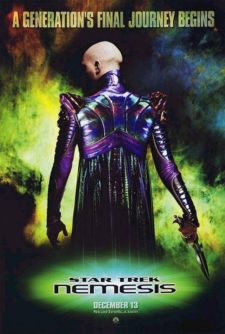
STAR TREK: NEMESIS
An exciting, morally serious Star Trek adventure for teens and adults.
Should You Watch It?
STAR TREK: NEMESIS earns its four-star rating with action-packed science-fiction adventure, strong performances, and an extremely well-written story. Patrick Stewart portrays a moral captain who makes selfless, wise decisions, while Brent Spiner gives especially memorable performances as Data and B4. The film also takes sacrifice, redemption, the fight against evil, and the struggle against internal evil seriously.
The cost is a −1 Family Content rating. Younger children may find the villains scary, and the violence could be traumatic for cognitively immature viewers. There is also a veiled bedroom scene, a disturbing attempted mental assault, humanist thinking, references to evolution, and politically correct elements involving cultural and moral relativism.
If you are a teenager or adult who can handle those concerns, WORTH THE TRIP — TEENS AND ADULTS. Leave younger children at home, and non-fans may want to bring a Star Trek-savvy friend.
The Story
NO SPOILERS — WE KEEP THE SURPRISESThe Enterprise is celebrating the marriage of Commander William Riker and Commander Deanna Troi when Captain Jean-Luc Picard is urgently summoned to Romulus. A change in government has placed a new praetor in power, and he claims to want peace with the Federation.
But the crew soon suspects foul play. After discovering an early android version of Data and detecting an intrusion into the ship’s computer system, the Enterprise faces a threat capable of destroying spaceships and entire planets.
Is It Any Good?
Four stars means this is one of the strongest Star Trek films in years. It is action-packed science-fiction fun for fans and newcomers, with an extremely well-written story, particularly in the second and third acts.
The old beloved stars of The Next Generation do a terrific job. Patrick Stewart is strong as Picard, while Brent Spiner receives special praise for his work as Data and B4. Their performances contribute to an extremely poignant, redemptive ending.
One visual choice weakens the film: the B4 pickup sequence on an arid planet is grainy and overexposed in an attempt to represent an alien atmosphere. The photography adds nothing and detracts from the action scenes during that sequence.
The Worldview
STAR TREK: NEMESIS presents a strong, moral captain who makes selfless and wise decisions while pursuing peace and unity throughout the galaxy. His virtues are portrayed more often than they are explained, though the film includes a quotation from 1 Corinthians 13 about seeing “through a glass darkly.”
The film also explores sacrifice, redemption, moral responsibility, and the fight against evil both outside us and within our hearts. Picard’s clone represents a rival claim to the self—something like the carnal nature continually seeking enthronement. Picard wonders whether suffering the same abuse would lead him to commit the same wrongs, but the film ultimately argues that a moral conscience can lead someone to rise above circumstances and do what is right.
At the same time, the film has a humanist worldview and includes references to evolution. It also presents politically correct humor and cultural relativism surrounding gender identity and alien wedding customs, including a joke about a ceremony requiring everyone to be naked. The film’s subtle homosexual and narcissistic nuances in Picard’s relationship with his clone are presented as evil. Some New Age elements also concern the evolution of telepathy in alien species.
The film’s moral vision is stronger than its theology, but its concern with sacrifice and self-giving points toward Christian truth: “Greater love has no one than this, that someone lay down his life for his friends” (John 15:13).
The Content Guide
The specifics — spoilers included by nature — so you can judge for your own family.
Content Summary
Light humanist worldview with evolution references and very strong, but flawed, moral elements, strong redemptive and very brief Christian content with a New Testament reference (Captain Picard refers to the love chapter in First Corinthians by saying during important scene, "We see through a glass darkly," major plot point where people risk their lives to the point of sacrifice for other people, and characters display willingness to examine their own hearts and better themselves) as well as a couple of politically correct elements displaying moral and cultural relativism elements (android refers to "transgender species" and comical references to alien wedding ceremonies where it's required that everyone be nude during ceremony), subtle homosexual allusions, and some New Age elements regarding the evolution of telepathy in alien species, including one of the officers among the good guys; about four or five light obscenities; strong, sometimes scary science fiction action violence including hand-to-hand combat, space battles, explosions, laser fire, and impaling; newlyweds start to make love in bed when they are interrupted by a nightmarish vision of the enemy, who's trying to control and "rape" the woman's thoughts and emotions; no nudity; alcohol use and Klingon complains about his terrible headache from drinking too much Romulan ale; and, alien woman murders entire elected Senate in her government in successful coup attempt but later repents and decides to join the good guys, but with little apparent future consequences, such as restitution or punishment, for that earlier horribly evil act. GENRE: Science Fiction H Ev BBB CC PC Ho Pa L VV S A MM
Talk About It
Questions for the drive home, the dinner table, or the youth group.
Picard asks whether suffering the same abuse as Shinzon would lead him to commit the same wrongs. How can you rise above painful circumstances and choose what is right?
Romans 2:14–15 · 1 Peter 2:19–23The film presents sacrifice as part of the fight against evil. What makes sacrifice loving rather than merely heroic?
John 15:13 · Philippians 2:3–8Picard’s leadership is marked by wisdom, selflessness, and a desire for peace. Which of those qualities does your family most need to practice?
James 3:17–18 · Matthew 5:9The film includes a quotation about seeing “through a glass darkly.” What does Scripture say about what we understand now and what we will one day see clearly?
1 Corinthians 13:12The Final Word
STAR TREK: NEMESIS is exciting, well-written, and morally serious, with strong performances and redemptive themes. Its violence, disturbing mental assault, bedroom scene, and humanist ideas make it unsuitable for younger children. For discerning teenagers and adults—especially Star Trek fans—it is WORTH THE TRIP — TEENS AND ADULTS.