THE CREATURE CASES: Episodes 5.1-5.3
Charming, animal-loving detective fun that teaches kids to be curious.
Should You Watch It?
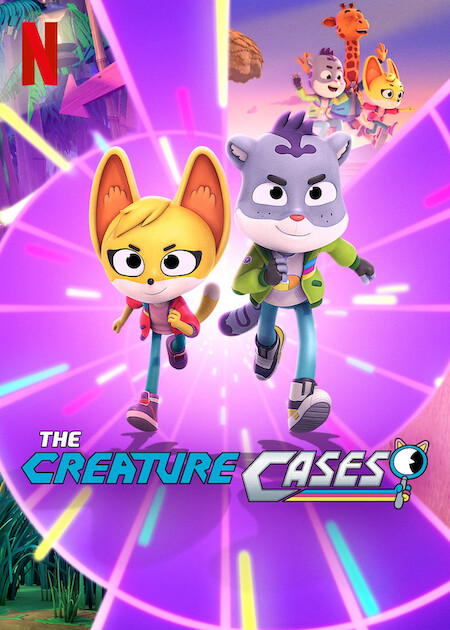
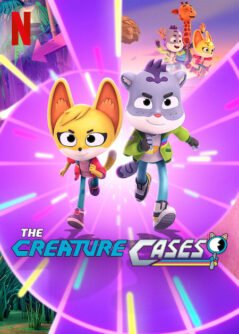
Here's the short answer: this is exactly the kind of show you can hand your young child without a second thought. Sam Snow and Kit Casey, two animal-detective partners, travel the globe solving gentle mysteries using real animal facts and gadget-filled teamwork. The lessons about respect, kindness, and curiosity aren't preached — they're simply lived out by characters kids will want to root for.
It doesn't lecture, and it doesn't need to. There's a light leaning toward environmentalism and observing nature closely, but the show stays focused on facts over messaging. The only things worth a mention are minor: a scientifically correct but slightly risqué pun about a baby elephant seal, and some reckless cartoon stunts that are clearly not meant to be imitated.
For families with young children who love animals, this is easy, educational, and enjoyable. Worth watching.
The Story
NO SPOILERS — WE KEEP THE SURPRISESSam Snow, a tidy snow leopard, and Kit Casey, a disorganized kit fox with a deep well of animal knowledge, are agents with C.L.A.D.E. — the Covert League of Animal Detective Agents. Armed with trackers, hoverboards, and a talking jet plane, they fly around the world solving animal mysteries, aided by their eccentric flying-squirrel friend Wally. Each new location brings a new puzzle rooted in real animal behavior — and that's where we'll leave it.
Is It Any Good?
Three stars means this is a well-made, genuinely entertaining kids' show that does its job better than most. The animation is seamless and colorful, paired with an upbeat, '80s-flavored techno score that keeps energy high. Sam and Kit are likable leads, and side characters like Wally Bungler add real humor and heart.
The three episodes reviewed follow a comfortable, repeatable structure: a mystery, an action sequence built on real animal facts, a resolution, and a closing "Mouse Squad's Fact File" dance segment that reinforces what kids just learned. The cases are simple by design, but the storytelling is clean and easy for young viewers to follow.
The Worldview
This is a moral show that shows rather than tells. The characters demonstrate respect, kindness, and teamwork through their actions — no episode stops to deliver a lesson out loud. There's a subtle, consistent nudge toward respecting nature and observing it closely, which leans gently toward environmentalism without ever becoming a message movie. Mostly, though, the show is a delivery vehicle for real animal facts, and it treats that information as genuinely useful and worth caring about.
That restraint is a strength. Kids absorb "solve problems as a team" and "be curious about the world God made" without ever feeling instructed. There's nothing here that departs from a biblical view of the world — creation is treated as wonderful and worth studying, and cooperation and care for others are quietly modeled throughout.
The show's heart — curiosity about the created world — echoes something Scripture says plainly: "Great are the works of the LORD, studied by all who delight in them" (Psalm 111:2). A show that gets children delighting in what God made is doing something worth celebrating.
The Content Guide
The specifics — spoilers included by nature — so you can judge for your own family.
Dominant Worldview and Other Worldview Content/Elements
A moral worldview, where morals are implied by the actions of the characters showing respect or nicety, not discussed per say but more so implied. The show is set in a more technologically advanced world, with simplistic plot lines and settings. The lessons carefully skirt any direct mention of moral lessons, at least in these episodes. While the series serves mainly as a vehicle for animal facts, there is a light implication to respect nature and observe while encouraging curiosity, suggesting a leaning towards environmentalism - however, this is not overtly stated, instead focusing mainly on the facts and how that information is useful to the plot. The characters are enthusiastic about their missions and solving them as a team where everyone has something to contribute to solving the mystery or at least participate in the action
Foul Language
No foul language. Episode 2 uses a pun about a “super weaner” about an elephant seal baby, which may be considered offensive, but it is the correct scientific definition. There is also a joke in episode 3, where a joke is made about a smell, and Wally says he stepped in something, but it is vague not calling out the source implied in the joke
Violence
Light cartoon violence as the characters are often reckless in the action scenes, doing stunts that would be considered dangerous in real-life
Sex
No sex
Nudity
No nudity, In episode 2, there are naked mole rats, as per their actual animal name, shown without clothing, but no detail is portrayed
Alcohol Use
No alcohol use
Smoking and/or Drug Use and Abuse
None;
Miscellaneous Immorality
Characters are often reckless in action scenes, doing stunts that would be considered dangerous in real life.
Talk About It
Questions for the drive home, the dinner table, or the youth group.
The agents solve every case as a team, each contributing something different. How does the Bible describe the value of working together this way?
Ecclesiastes 4:9–10 · Romans 12:4–5The show encourages kids to be curious and observe animals closely. How can paying close attention to creation help us know God better?
Psalm 19:1 · Romans 1:20The characters often take risky, reckless stunts to solve their cases. What's the difference between courage and recklessness?
Proverbs 14:16The characters show respect and kindness through their actions rather than explaining it in words. Why might living out good character matter more than just talking about it?
James 2:18 · Matthew 5:16The Final Word
This is a small, well-made gift for families with young animal lovers — fun, colorful, and quietly good for the soul without ever preaching. Our answer is the same one we opened with: worth watching.