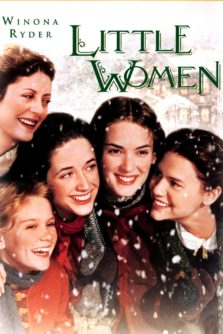
LITTLE WOMEN
A warm, beautifully acted family classic about sisterhood and faith.
Should You Watch It?
If you want a substantial family film built around sisterhood, sacrifice, parental strength, and chaste courtships, this adaptation is an excellent choice. Its four March sisters grow up poor in Civil War-era New England, but the story presents them as spiritually rich and capable of finding love, success, and happiness.
The movie’s Christian elements are positive but quieter than in Alcott’s book. It includes Christian characters and actions, strong parental figures, and a general theme pointing toward Heaven, while leaving out some of the book’s explicit religious material.
Choose it for a thoughtful family viewing experience, especially if you value winning performances and stories about character formation.
The Story
NO SPOILERS — WE KEEP THE SURPRISESMeg, Jo, Beth, and Amy March grow up in Civil War-era New England with little money but a strong family bond. Jo, restless and determined to succeed as a writer, becomes the story’s driving force as each sister faces her own hopes, struggles, and understanding of love.
Is It Any Good?
Four stars means this is a highly successful adaptation. Director Gillian Armstrong deftly weaves scenes from Alcott’s book into a coherent plot, using Jo’s growth from a wild girl into a disciplined, accomplished young woman as the unifying thread.
Winona Ryder gives Jo a dynamic performance despite some occasionally forced dialogue. Kirsten Dunst and Claire Danes also give winning performances. The film’s emphasis on personal growth and sisterhood makes the story accessible and emotionally engaging.
The Worldview
The movie’s worldview is morally positive. It presents Christian characters and actions, strong parental figures, chaste courtships, generosity, family loyalty, and personal growth as worthy things. Jo’s decision to sell her hair to help her war-injured father shows sacrifice flowing from love for family.
However, the strong religious themes in Alcott’s book are downplayed. Mr. March is never identified as a reverend, and the scene in which the Professor eloquently defends God is not included. The emphasis falls instead on Jo’s personal growth and the sisters’ relationship. Through its music and general theme, though, the movie still makes clear that Heaven is where salvation lies.
The film points toward the biblical truth that love, sacrifice, and family faithfulness matter. “Bear one another’s burdens, and so fulfill the law of Christ” (Galatians 6:2).
The Content Guide
The specifics — spoilers included by nature — so you can judge for your own family.
Content Summary
Moral worldview with positive Christian characters & actions, strong parental figures & chaste courtships, but no mention of Jesus Christ.
Talk About It
Questions for the drive home, the dinner table, or the youth group.
Jo channels her restless energy into writing and grows into a disciplined, accomplished young woman. What gifts and desires has God given you, and how can you use them faithfully?
1 Peter 4:10 · Colossians 3:23Jo sells her hair to send money to her war-injured father. What does her sacrifice teach about loving family members through action?
1 John 3:18 · Philippians 2:3–4The March sisters grow up poor but spiritually rich. What makes a family spiritually rich, even when it lacks material wealth?
Matthew 6:19–21 · Proverbs 15:16The movie points toward Heaven but says less about the faith emphasized in Alcott’s book. Why does Scripture say our hope of salvation rests in Christ?
John 14:6 · Ephesians 2:8–9The Final Word
This is a warm, beautifully acted adaptation with strong family relationships, positive Christian examples, and chaste courtships. It softens the book’s religious themes, but its moral heart remains generous and uplifting. For your family, the answer is WORTH THE TRIP.