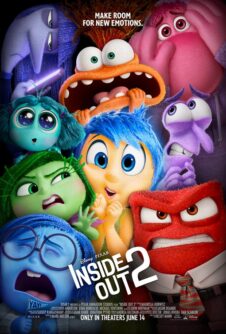
INSIDE OUT 2
A joyful, wise return to form — Pixar's best in years.
Should You Watch It?
This is the easy kind of recommendation. Pixar has made a movie that is funny, inventive, and heartwarming, and underneath the laughs it's teaching something true: that joy is our strength, that emotions are meant to be stewarded rather than surrendered to, and that friendship, repentance, and forgiveness are worth fighting for.
The only caution is a mild one. There's some peril inside Riley's mind — falls, tight escapes, a wild ride toward a cliff — and a large, hooded character named Embarrassment who looks scarier than he actually is. Younger or more sensitive kids may need a hand to hold.
Beyond that, there's nothing here to dodge. This is a film you can watch as a family without flinching, and one that gives you plenty to talk about afterward. Take the whole family.
The Story
NO SPOILERS — WE KEEP THE SURPRISESRiley has just turned 13, and with the birthday comes something new: a control panel overhaul in her own head. As she heads off to a make-or-break high school hockey camp, unruly new emotions — led by Anxiety — muscle their way into the control room and push Joy and her old friends out to the far edges of Riley's mind. Whether Joy can find her way back before Anxiety rewrites who Riley believes she is — that's the story worth watching unfold.
Is It Any Good?
Four stars means this is Pixar working at full strength, and it shows. The film is delightful, funny, and visually inventive in the ways it dramatizes an internal life — turning belief systems, memory, and puberty itself into imagery kids and parents can actually see and discuss. It's being called Pixar's best since Toy Story 4, and the craft backs that up: the emotional beats land, the humor works, and the storytelling finds fresh, concrete ways to picture something as abstract as anxiety taking over a teenager's mind.
The Worldview
This film is unusually clear-eyed about what it means to grow up. It names anxiety as a real force that can hijack a person's decisions and rewrite their sense of self — and it argues, rightly, that the answer isn't to banish hard feelings but to bring every emotion, good and bad, back under wise control. Joy's arc, from confident manager to a girl crying out for help, echoes something like prayer; her path back runs through repentance and forgiveness, not willpower alone. The film also lands on a mature insight: fixating only on your best memories, or only on your worst, distorts you either way. Both truth and grace are needed.
Worth noting plainly: unlike much of Disney and Pixar's recent output, this film carries no ideological agenda — it's simply telling a good, honest story about a girl's inner life.
The film's driving theme — that joy properly ordered is strength, and fear need not have the final word — echoes Scripture directly: "the joy of the LORD is your strength" (Nehemiah 8:10). It's also worth remembering that joy and self-control are fruits of the Spirit, not just character traits we muster on our own (Galatians 5:22–23).
The Content Guide
The specifics — spoilers included by nature — so you can judge for your own family.
Content Summary
CONTENT: (CC, BBB, C, PP, V, M):
Dominant Worldview and Other Worldview Content/Elements
Strong Christian moral worldview about “the joy of the Lord is your strength” (Nehemiah 8:10c) with many redemptive elements about doing the right thing, controlling your emotions, caring for your friends, both old and new, kindness, friendship, repentance, and forgiveness, plus movie promotes the competitive spirit within a team sports context, specifically hockey
Foul Language
No obscenities or profanities, but there are verbal references to “heck” and a reference to pee in a swimming pool
Violence
Some hockey violence where female teenage players fall and run into one another on the rink, emotion avatars inside 13-year-old teenager fall, ride a waterway that comes to a cliff, hang from heights, are forced into a tube that whisks them away, etc.
Sex
No sex, but the word Puberty is shown on the control panel in an animated girl’s brain
Nudity
No nudity
Alcohol Use
No alcohol use
Smoking and/or Drug Use and Abuse
No smoking or drugs;
Miscellaneous Immorality
Girl sneaks into hockey coach’s office to look at coach’s secret notes on prospective players at hickey camp and sometimes girl has negative, conflicting emotions that come out in a negative way with other people, especially her parents, but everything is resolved in a positive way at the end with repentance and forgiveness.
Talk About It
Questions for the drive home, the dinner table, or the youth group.
Anxiety convinces Riley to abandon her old friends to chase approval from a new group. When have you felt that same pull, and what helped you stay loyal to the people who already love you?
Proverbs 17:17The movie says fixating only on your best memories — or only on your worst — distorts who you become. How does Scripture teach us to hold both our failures and our victories honestly?
Philippians 3:13–14Joy's turning point is crying out for help rather than trying to control everything herself. What does it look like for you to bring your anxious thoughts to God instead of managing them alone?
Philippians 4:6–7Riley has to repent to her friends and her parents by the film's end. Why is real repentance — not just an apology — necessary for forgiveness to do its full work?
1 John 1:9The Final Word
Pixar found its footing again with this one — funny, wise, and unafraid to say that joy is our strength and self-control is worth fighting for. There's a little peril to manage with the youngest viewers, but nothing that should keep your family away. Worth the trip.