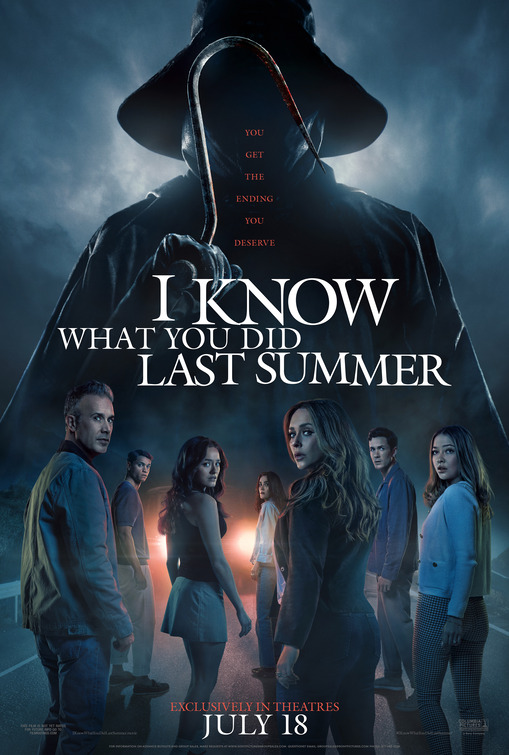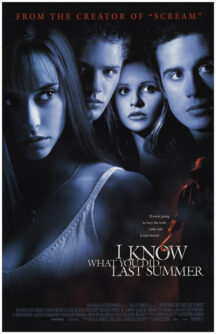
I KNOW WHAT YOU DID LAST SUMMER
An uncreative, bloody teen horror film with little lasting value.
Should You Watch It?
The premise has genuine intrigue: four teenagers accidentally hit a man with their car, believe he is dead, and decide to hide the body. A year later, an anonymous message brings their secret back, followed by a killer in a black fisherman’s slicker carrying a sharp hook.
But the film quickly abandons its most interesting moral question for stock horror devices, disturbing images, bloodshed, and gore. It is less clever and less funny than Scream, with low-brow dialogue and little creativity. The source review also notes that its scares may appeal to less discerning youths looking mainly for a date movie.
The practical answer is simple: SKIP IT.
The Story
NO SPOILERS — WE KEEP THE SURPRISESAfter Helen wins a local beauty pageant, she and three fellow high school graduates celebrate at a beach bonfire with scary stories, heavy drinking, and romance. On the drive home, they accidentally hit a man.
Believing they have killed him, the four fear that reporting the incident will ruin their futures. They choose to hide what happened. A year later, an anonymous letter arrives: “I know what you did last summer.” Soon, a fisherman’s-slicker-wearing man with a sharp hook begins terrorizing them.
Is It Any Good?
Two stars means the movie has a promising setup but does not sustain its interest or creativity. The opening question—what young people would do after believing they had caused a death—is intriguing and gives the story an unusual moral pressure.
The film then turns to familiar horror staples: a costumed killer, creative murders, scream queens, naysayers, gore, and grotesqueries. The dialogue is low-brow and simple, and the movie becomes a lowest-common-denominator scare fest. It may attract viewers through its stars and writer, but the source review does not find it memorable beyond its possible sequel-making premise.
The Worldview
The film presents a pagan worldview in which teenagers fail to make the right decision and are punished for it. Its central moral reality is consequence: the four youths are conscience-stricken after hiding what they believe is a death, and their secret returns to haunt them. Yet the story moves away from the moral question into revenge, stalking, and mayhem rather than offering a deeper account of justice or repentance.
The film contains no occult or supernatural elements, according to the source review. Still, its world is shaped by fear, deception, revenge, and punishment. The result is a grim view of wrongdoing that recognizes guilt but turns it into a mechanism for horror.
The casting and presentation are also aimed squarely at the teenage market. The film uses recognizable television actresses and attractive young stars, while its sexualized presentation helps position it as a date-night horror attraction for teenagers.
Scripture likewise warns that choices have consequences: “for whatever one sows, that will he also reap” (Galatians 6:7).
The Content Guide
The specifics — spoilers included by nature — so you can judge for your own family.
Content Summary
Pagan worldview of teenagers who fail to make the right decision & are punished for it; 42 obscenities & 12 profanities; excessive violence including numerous attacks by man with large, metal hook causing death & bloodshed, images of corpse, 2 scenes where car hits man, beating, & attempted intentional drowning; implied fornication & some sexual situations; no nudity but female leads show ample cleavage; alcohol use & abuse; smoking; and, miscellaneous immorality including lying, deception, stalking & revenge themes
Talk About It
Questions for the drive home, the dinner table, or the youth group.
The teenagers believe their futures will be ruined if they tell the truth. Why can fear make people choose deception, and what does God call us to do when we have done wrong?
Proverbs 28:13 · 1 John 1:9The film turns guilt into a story of revenge. How is biblical justice different from personal vengeance?
Romans 12:19 · Micah 6:8The characters face consequences after trying to hide what happened. Where have you seen choices produce consequences in real life?
Galatians 6:7 · Luke 6:43–45The film is designed as a teenage date-night horror movie. How should entertainment shape—or fail to shape—our desires and decisions?
Philippians 4:8 · 1 Corinthians 10:23The Final Word
This two-star horror film begins with a promising question about guilt and responsibility, then settles for gore, stock scares, and revenge. Its excessive content makes it unsuitable for families, and its limited creativity makes it easy to leave behind. Our answer is SKIP IT. For better alternatives, see.