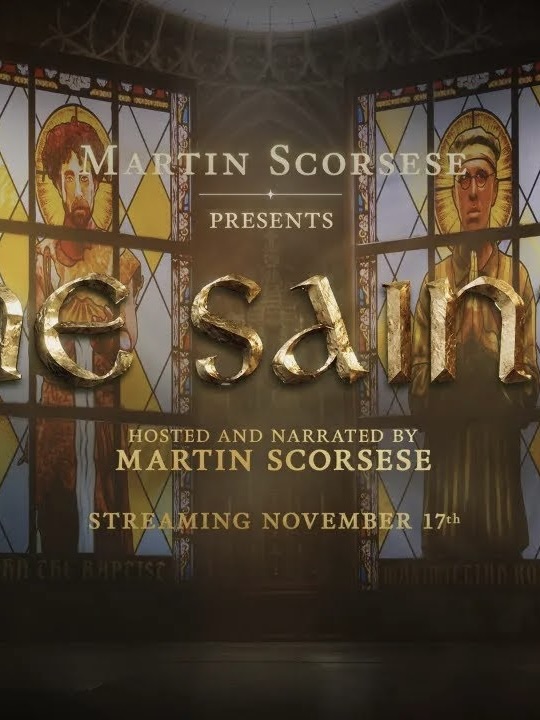

MARTIN SCORSESE PRESENTS: THE SAINTS: MARY
A beautifully acted Easter portrait of Mary's faith — with a Roman Catholic accent worth knowing about.
Should You Watch It?
This is Martin Scorsese's Easter gift by way of his series THE SAINTS, and it largely earns its four stars. The re-enactments of Mary's betrothal, the angel Gabriel's visit, the Wedding at Cana, and Jesus confronting the Pharisees are dramatic and well-acted, and the special keeps its focus where it should: on Mary's faith, her trust in God, and her love for her son.
The one thing to walk in knowing is that this is Scorsese's own faith tradition speaking. A few scenes and the discussion that follows present the immaculate conception of Mary and her bodily ascension to Heaven — both distinctly Roman Catholic doctrines, not shared across all Christian traditions. None of it is presented as controversial; it's simply presented as true.
For families comfortable navigating that with older kids, this is a rich, well-made Easter watch. For those wanting a strictly non-Catholic retelling, know what you're getting first.
The Story
NO SPOILERS — WE KEEP THE SURPRISESBefore she was known as the mother of Jesus, Mary was a young woman betrothed to a carpenter named Joseph — until an angel changed everything. This Easter special follows her from that betrothal through the announcement of Gabriel, into the early years of her son's life and ministry, tracing a mother's quiet trust in God through the story most Christians know by heart. Scorsese frames it all with a short introduction and a closing discussion.
Is It Any Good?
Four stars means this one delivers where it counts: performance and craft. The actors playing Mary and Jesus do excellent work, and two scenes stand out — the Wedding at Cana plays warmly and naturally, and Jesus's confrontation with the Pharisees carries real dramatic weight. The re-enactments move briskly through decades of biblical narrative in under an hour, which means breadth comes at the cost of depth; this is an overview, not an exploration. But within that limited runtime, the production looks and feels historically grounded, and it never loses sight of its emotional center: a mother's faith.
The Worldview
At its core, this is a strongly Christian, biblical program, and it gets the big things right. It exalts trust in God — Mary's yes to Gabriel, Joseph's willingness to believe a hard thing — and it exalts love, both Mary's love for her son and the family's quiet faithfulness through danger, exile, and loss. Those are convictions Scripture shares without qualification.
Where the film departs from a broadly biblical view is specific and worth naming once, clearly: it teaches the immaculate conception of Mary — that she was born without original sin — and depicts her assumption directly into Heaven at death. Both are Roman Catholic doctrines not found explicitly in Scripture and not shared by Protestant, Orthodox, or nondenominational Christians, though the special presents them simply as fact rather than as one tradition's belief among others.
Underneath the doctrine, though, is a longing every believer recognizes: to trust God with an impossible word, the way Mary did. "Behold, I am the servant of the Lord; let it be to me according to your word" (Luke 1:38) — that's the heart of this story, whatever tradition tells it.
The Content Guide
The specifics — spoilers included by nature — so you can judge for your own family.
Content Summary
CONTENT: (CCC, BBB, VV, N, A, M):
Dominant Worldview and Other Worldview Content/Elements
Very strong Christian, biblical worldview on the Virgin Mary from a Roman Catholic perspective stresses trusting in God and love and has biblical scenes involving Mary, Joseph, Jesus, the Magi, King Herod the Great, the Pharisees, the triumphant entry into Jerusalem, the crucifixion of Jesus, and the Resurrection of Jesus;
Foul Language
No foul language;
Violence
Bloody scene when a lamb is sacrificed at the temple and when Jesus Christ’s bloody body is shown after he dies on the cross, with a short scene about King Herrod the Great ordering Roman soldiers to kill babies under two years;
Sex
No sex;
Nudity
Upper male nudity at the crucifixion scene;
Alcohol Use
Some drinking of wine when Jesus changes water into wine at the wedding;
Smoking and/or Drug Use and Abuse
No smoking or drugs; and,
Miscellaneous Immorality
A comment about feeling God instead of seeing Him, a mention of the Virgin Mary being born sinless, and a scene where Mary dies and seems to rise from her deathbed to Heaven.
Talk About It
Questions for the drive home, the dinner table, or the youth group.
Mary responds to an impossible announcement by saying, "Let it be to me according to your word." When has God asked you to trust Him with something you didn't understand?
Luke 1:38 · Proverbs 3:5–6Joseph believed Mary even when it was "a hard thing to believe." What does it look like to trust someone — or trust God — before you have all the answers?
Matthew 1:18–24This special teaches that Mary was born without sin and taken directly to Heaven — beliefs specific to Roman Catholic teaching. How would your family compare that to what Scripture says about who needs a Savior?
Luke 1:47 · Romans 3:23At the Wedding at Cana, Mary's quiet request starts Jesus's public ministry. What does her role there teach us about how we can point others toward Christ?
John 2:1–11The Final Word
Scorsese has made a moving, well-acted Easter portrait of a mother's faith — and one that wears its Roman Catholic convictions openly. Know that going in, watch it with your older kids, and let it start good conversations rather than end them. Worth the trip — ages 10 and up.