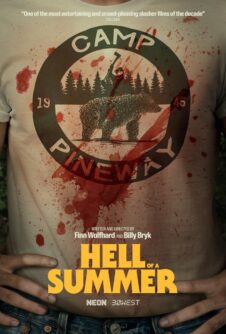
HELL OF A SUMMER
A camp slasher drenched in gore, profanity, and cheap laughs.
Should You Watch It?
Let's be plain up front. HELL OF A SUMMER buries a small, decent idea — one man who keeps choosing to protect the people around him even when they mistreat him — under a pile of gore, profanity, and shallow comedy. The good in it is real but slight. The cost of getting to it is not.
This is a −3 movie, and the number tells the truth. Multiple scenes of bloody, cruel murder. Seventy-two obscenities, 55 of them "f" words. Marijuana on the lake, underage drinking, a drunk character, crude sexual talk, and a scene where a girl pulls out a Ouija board to reach the dead. The movie plays most of it for laughs, which doesn't make it lighter — only more careless.
So our answer is simple: skip it. There's a kinder film for your family, and a more nourishing one for your own evening.
The Story
NO SPOILERS — WE KEEP THE SURPRISESCamp Pineway is supposed to be a summer paradise. Instead, a masked killer is already at work before the season even begins.
Eleven young adult counselors arrive to open the camp, unaware that anything is wrong. With the owners mysteriously absent, the oldest of them — 24-year-old Jason, desperate to be liked — appoints himself "camp leader." Then the bodies start turning up, the counselors turn on one another, and everyone races to figure out who among them is holding the knife.
Is It Any Good?
Two stars, and here's what they mean. HELL OF A SUMMER knows exactly what it is: a campy horror-comedy built out of familiar slasher parts — isolated young people, a cheerful camp, a masked psychopath, a lineup of recognizable youthful stereotypes. It assembles those pieces competently and aims its humor squarely at a younger crowd.
But competent isn't the same as good. The comedy is shallow, most of the characters are conceited and thin, and the film leans on genre clichés rather than doing anything fresh with them. Worst of all, the ending glosses over the sheer amount of death and destruction it just staged — an unrealistic, over-simplified wrap-up that treats real horror as a punchline. The result is watchable but empty.
The Worldview
There is a flicker of light here, and it's worth naming. The murders are shown as genuinely wrong and horrific, not glamorized. The oldest counselor chooses, again and again, to defend and care for the younger ones even when they don't deserve it — and one girl sees the good in him and turns back to rescue him when she could have fled to save herself. That instinct to protect the undeserving echoes something true.
But the film mixes and mostly smothers that decency. Most of the other characters are shallow and conceited. Even the one who does heroic things does them for selfish, vain reasons — outwardly good, inwardly hollow. The killers show no remorse, only a hunger for fame through murder. And a girl claiming to be clairvoyant breaks out a Ouija board to speak with the dead; the movie treats her occult interest as an absurd joke, and she's always wrong, but the object still ends up on screen.
Under it all runs a humanist shrug. The story stages tremendous violence and then waves it away, unwilling to sit with what death actually costs. Scripture won't let us shrug that easily — laying down your life for people who don't deserve it is the very shape of love: "Greater love has no one than this, that someone lay down his life for his friends" (John 15:13). This movie gestures at that love and then loses it in the noise.
The Content Guide
The specifics — spoilers included by nature — so you can judge for your own family.
Dominant Worldview and Other Worldview Content/Elements
Relatively light moral worldview mixed with and mitigated by pagan, occult and humanist in a story about a psychopathic killer at a summer camp where the murders are still depicted as wrong and horrific and the oldest camp counselor chooses over and over to defend and keep the other, younger counselors safe and taken care of even when they don’t deserve it, and a girl sees the good in him and turns back to save him when she has an opportunity to leave, but most of the other characters are shallow and conceited, but a girl claims to be clairvoyant and pulls out a Ouija board in one scene though she’s always wrong and her character and occult interests are mainly treated as an absurd joke, and, though the movie is more of a horror comedy, the ending seems to gloss over the realities of so much death, destruction and violence that’s unrealistic and over-simplified
Foul Language
72 obscenities (including 55 “f” words) and three OMG profanities
Violence
Multiple scenes of bloody and cruel murder with blood and gore
Sex
Strong sexual content or sexual immorality overall includes several sexual references such as discussion of oral sex, a mention of male arousal, dialogue saying killing makes for better sex, couples seen kissing, and there’s a homosexual character, but no details are discussed about his activity or lifestyle
Nudity
No nudity
Alcohol Use
Young adults shown drinking and partying on the lake, adults drink beer at a campfire, and a person is shown drunk
Smoking and/or Drug Use and Abuse
No tobacco use but young adults smoke marijuana on the lake;
Miscellaneous Immorality
Strong miscellaneous immorality such as people falsely accuses one 24-year-old man at the camp of being the killer, and they tie him to a bunk, the real killer kidnaps the accused, the accused young man is desperate to be liked, one character only does good or heroic things for selfish and often vain reasons but is morally empty in any real sense, psychopathic killers display no remorse and only glorification and a desire to become famous for murder, and young adults don’t respect the 24-year-old man for being their elder despite him looking after them.
Talk About It
Questions for the drive home, the dinner table, or the youth group.
The oldest counselor keeps protecting people who mistreat him. What does it look like to serve and defend those who don't deserve it — and where does that impulse ultimately come from?
John 15:13 · Romans 5:8One character does "good" deeds only for selfish, vain reasons, and the film calls him morally empty. Can outwardly good actions be hollow inside? What does God look at?
1 Samuel 16:7 · Matthew 6:1–4The story's clairvoyant reaches for a Ouija board to contact the dead — treated here as a joke. Why does Scripture take consulting the dead so seriously?
Deuteronomy 18:10–12 · Isaiah 8:19The movie stages enormous violence, then shrugs it off at the end. What's lost when we treat death and destruction as entertainment rather than tragedy?
Proverbs 14:12 · Ecclesiastes 7:2The Final Word
There's a decent instinct buried in this movie — a man who lays himself down for people who don't deserve it. But it's smothered under gore, seventy-plus obscenities, drug use, and occult play, all played for laughs. So our answer stands: skip it. For a movie night that won't cost your family this much, start with our family-friendly picks.