DR. SEUSS’S HORTON!: Episodes 2.1 to 2.3
Horton the habitat helper — a wholesome jungle for the whole family.
Should You See It?
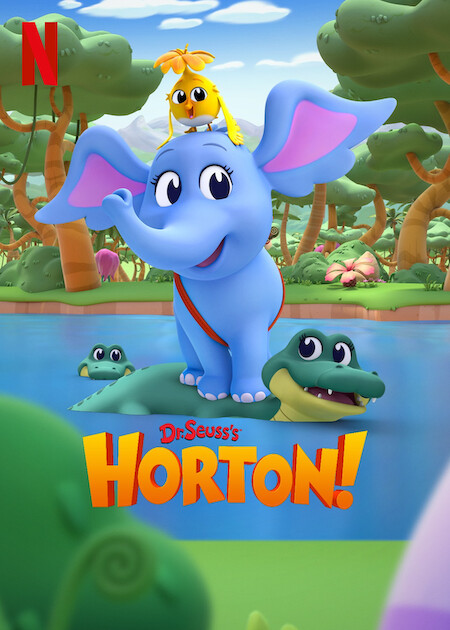
Here's the good news up front: this one is safe, and it's genuinely nice to watch. Season Two of Netflix's DR. SEUSS'S HORTON! gives you a servant-hearted elephant and his expressive bird pal, Samson, roaming the jungle to help their neighbors — and asking for help themselves when they need it. The animation is clean and bright, the comic timing lands, and the lessons about compassion and faithfulness are the kind you'll be glad your kids absorb.
There's little to guard against. A kangaroo named Jane models some selfishness and mild name-calling, there's light bathroom humor, and brief cartoon action turns up as a plot point in most episodes. None of it is more than a gentle caution for the smallest viewers.
So the practical answer is easy: press play with your young children, and enjoy the ride.
The Story
NO SPOILERS — WE KEEP THE SURPRISESDeep in a jungle full of talking animals lives Horton, a young elephant with a promise to keep and a heart set on helping. Alongside his comedic bird friend Samson, he heads to the far corners of his world whenever a neighbor is in trouble.
In these first three episodes of Season Two, the pair searches for baby hedgehogs scared off by loud thunder and sets out to replace a friend's broken necklace. Every obstacle meets the same "can-do" spirit — and Horton's willingness to ask for a hand when he needs one.
Is It Any Good?
Three stars, and here's what they buy. The production quality is high: clean, bright animation and a thoughtfully stylized world that nods to Dr. Seuss's bold color palette without straining for his impossible landscapes. The humor is warm and the storytelling carries its lessons naturally — characters live out the values, and the audience learns by watching.
What holds it back from a fuller mark is missed opportunity. For a show set in a jungle packed with animals, it does little animal identification — most creatures get human names, and Horton's flightless bird friend never even gets labeled. It leans on fantasy over facts, and its songs, catchy as they are, work more as narrative glue than as reinforcement of the core values they could be teaching. A lovely watch that could have taught more.
The Worldview
This is a show with a real moral spine. It never mentions Jesus by name, but it promotes redemptive qualities plainly and consistently, prizing sacrificial love, reliability, faithfulness, hope, servanthood, and selflessness. Horton's catchphrase — "I meant what I said and I said what I meant, I promised to help one-hundred percent" — is the beating heart of the whole enterprise, and it's a heart Christian parents will recognize.
What the episodes do best is give children practical scenarios to talk through: fear, compassion, and inclusion, all worked out in stories rather than lectures. The antagonist kangaroo, Jane, exists to show the flip side — selfishness and mild name-calling that the heroes quietly answer with kindness. It's a clean, gentle moral world, and the counterbalance always tips toward the good.
The longing under all of it is simple and biblical: to keep our word and lay ourselves down for our neighbors. Horton promises to help one-hundred percent. Scripture names the same faithfulness as love itself — "Greater love has no one than this, that someone lay down his life for his friends" (John 15:13).
The Content Guide
The specifics — spoilers included by nature — so you can judge for your own family.
Strong Christian, redemptive, moral worldview values sacrificial love and reliability while stressing faithfulness, hope, servanthood, and selflessness. (Horton’s catchphrase, “I meant what I said and I said what I meant, I promised to help one-hundred percent,” beautifully reflects the heart of the series
No foul language but there’s some light bathroom humor
Brief cartoon action violence, such as one character throws another character into a bush after they take berries from him
No sex
No nudity
No alcohol use
No smoking or drugs
An antagonist kangaroo serves as a bad role model by displaying selfishness while berry picking and demanding that others get out of her way, and engaging in mild name calling such as “bezelnut brains.”
Talk About It
Questions for the drive home, the dinner table, or the youth group.
Horton promises to help "one-hundred percent." Why does keeping our word matter so much, even in small things?
Matthew 5:37 · Psalm 15:4Horton is brave enough to help others and humble enough to ask for help himself. Which of those is harder for you? | Galatians 6:2 · Ecclesiastes 4:9–10When the little hedgehogs are frightened by thunder, Horton goes to find them. How does God want us to treat someone who's afraid? | Isaiah 41:10 · 1 Thessalonians 5:14Jane the kangaroo pushes others out of her way and calls names. What does the Bible say about how we treat the people around us — even when we want something? | Philippians 2:3–4 · Ephesians 4:29The Final Word
This is a warm, well-made show with a genuinely good heart — an elephant who keeps his promises and a jungle full of lessons in kindness that your little ones can carry off the couch. A little bathroom humor and some brief cartoon tussles are all you'll need to watch for. For your family, it's an easy call: worth watching.