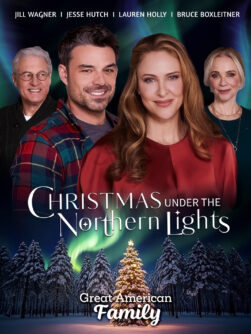
CHRISTMAS UNDER THE NORTHERN LIGHTS
A sweet, small-town romance that puts Jesus back in Christmas.
Should You Watch It?
Yes, and gladly. This is a Christmas romance that does something rare for the genre: it names names. Characters here talk openly about the "Newborn King," about "the wonders of God's creation," and about Jesus as the "true light" of the season — not as vague holiday sentiment, but as the actual point of the story.
Around that center is a genuinely sweet romance, a talented cast, and a small-town setting that earns its charm rather than coasting on it. There's nothing here to brace yourself against — no language, no violence, no content to screen out — just a story that trusts family roots, community, and a little old-fashioned faith to carry a Christmas tale.
If your family wants a holiday movie you can watch together without editing anything out, and one that actually points toward the manger instead of around it, this is it.
The Story
NO SPOILERS — WE KEEP THE SURPRISESErin is a successful author with a book deal on the line — and no inspiration to finish it. When her widowed father decides to sell the family property in his small hometown of Aurora, he asks her to come along. She agrees, partly for him, partly hoping the trip — and maybe the Northern Lights — will shake something loose in her writing. There, a local tour guide named Trevor shows her a side of the town, her family history, and the season itself that she wasn't expecting to find.
Is It Any Good?
Four stars means this one delivers on every front it's aiming for. The cast carries the story with warmth and ease, and the small-town romance never feels forced or padded — it hits, as the source material puts it, "all the sweet spots."
What sets it apart from other holiday romances isn't just craft, though — it's confidence. The film isn't shy about its message, and it doesn't need to dress up faith in metaphor to make it palatable. That directness, paired with a cast that clearly believes in the material, makes for a Christmas movie that's satisfying as both romance and testimony.
The Worldview
This film exalts what Christmas is actually about. Characters speak plainly of the "Newborn King," of the "wonders of God's creation," and of Jesus as the "true light" of the season — the kind of direct, unembarrassed faith language that holiday romances usually soften into generic "magic of the season" talk. The film also weaves in real Christian heritage: Henry Wadsworth Longfellow's hymn-poem "I Heard the Bells on Christmas Day" becomes a family tradition, and carols like "Silent Night" and "O Little Town of Bethlehem" score the film rather than generic jingles.
Alongside the faith content, the film places high value on family, community, and roots — the kind of grounded, others-oriented love that Scripture consistently commends. There's no distortion to flag here, no worldview to push back against. This is a film aligned with a biblical view of the season: gifts brought "on bended knee" to a King, not a marketing opportunity.
The film's romance is really just the surface story. Underneath is a woman rediscovering where she came from and what the season is actually for — and that search for roots and light points to something Scripture names directly: "The people who walked in darkness have seen a great light" (Isaiah 9:2).
The Content Guide
The specifics — spoilers included by nature — so you can judge for your own family.
Dominant Worldview and Other Worldview Content/Elements
Very strong Christmas, biblical, moral worldview celebrates the Christmas season with mentions of the “Newborn King,” Jesus and that “we all bring gifts to (this King) on bended knee,” a main character points to “the wonders of God’s creation,” several Christmas carols are in the movie score such as “Silent Night” and “O Little Town of Bethlehem,” mentions are made to a family tradition with roots in the faithful Christmas poem by Henry Wadsworth Longfellow’s “I Heard the Bells on Christmas Day,” high value is placed on community, family and family roots
Foul Language
No foul language
Violence
No violence
Sex
No sex (one light kiss)
Nudity
No nudity
Alcohol Use
Light use of alcohol for celebration
Smoking and/or Drug Use and Abuse
No smoking or drugs;
Miscellaneous Immorality
Nothing objectionable.
Talk About It
Questions for the drive home, the dinner table, or the youth group.
The film calls Jesus the "true light" of Christmas. What does it mean to bring your "gifts on bended knee" to Him rather than just exchange presents this season?
Matthew 2:11 · John 1:9Erin finds inspiration by reconnecting with her family's roots and history. Why does Scripture put such weight on remembering where we come from and honoring our parents?
Deuteronomy 6:6–7 · Exodus 20:12Trevor's old-fashioned approach clashes with Erin's modern instincts, and their differences almost cost their relationship. What does this suggest about patience with people who see the world differently than you do?
Proverbs 15:1 · Ephesians 4:2The film borrows from Longfellow's poem "I Heard the Bells on Christmas Day," written amid personal grief, yet it still proclaims hope. Where do you see hope holding steady in hard seasons of your own life?
Lamentations 3:21–23The Final Word
This is the rare Christmas romance that says the name of Jesus out loud and means it. Warm performances, a grounded small-town setting, and a message that honors the real reason for the season make this an easy recommendation. Worth the trip. Gather the whole family for this one.