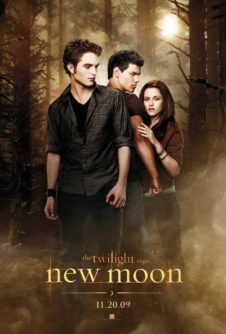
THE TWILIGHT SAGA: NEW MOON
What good is it to gain the world and forfeit your soul?
Should You Watch It?
The decision is straightforward even though the movie has real strengths. NEW MOON offers sacrificial love, an offer of marriage, restraint from drinking human blood, and characters who struggle with the desire to be good. Kristen Stewart gives an excellent performance, and the production improves on the first film in emotional depth and faithfulness to the book.
But the story makes dangerous emotions look like the truest form of love. Bella becomes nearly unable to function after Edward leaves, then recklessly risks herself to feel close to him again. The romance combines love, lust, and obsession, while the vampire mythology gives occult and pagan ideas an attractive setting. Bella’s desire to become a vampire—even if it means losing her soul—is especially troubling.
You should skip NEW MOON, despite its moral elements and solid filmmaking.
The Story
NO SPOILERS — WE KEEP THE SURPRISESBella begins her senior year and celebrates her 18th birthday with Edward Cullen, the vampire who loves her but refuses to attack humans. After an accident at the Cullen home, Edward leaves Forks because he believes he is protecting Bella from the dangers of his world.
Heartbroken, Bella slowly reconnects with Jacob Black, a childhood friend from the Quileute tribe. Their friendship helps her feel alive again, even as Edward’s memory remains painful and Jacob faces a startling change in his own heritage.
Is It Any Good?
Three stars means NEW MOON is a capable, emotionally effective film with serious flaws. Its production values are stronger than those of TWILIGHT, the character portrayals have greater emotional depth, and the actors give excellent performances. Kristen Stewart carries the movie to the end.
The screenplay is well written overall and offers a fair, accurate representation of the book, though some scenes are rearranged. Director Chris Weitz clearly caters to fans, who will likely appreciate the adaptation. Viewers expecting lots of action may be disappointed, since the film focuses more on Bella’s heartbreak and recovery than on excitement. Viewers who have not read the books may also miss some finer details.
The Worldview
NEW MOON presents a strong Romantic worldview in which teenagers are ruled by their feelings, nearly to the point of obsession, rather than by common sense. The film treats Bella and Edward’s relationship as so intense that they seem unable to exist without each other. That is presented as true love, though the review finds it closer to a mixture of love, lust, and obsession.
The vampire and werewolf world is made attractive through extraordinary powers and secret supernatural societies. The story also includes pagan beliefs involving animal totemism, occult abilities, unresolved questions about souls and damnation, and a heroine who wants to become a vampire even if she loses her soul. At the same time, the film includes moral and redemptive elements: sacrificial love, restraint, a desire to be good, and the idea that drinking human blood is evil.
The film’s cultural and casting choices are not discussed in the source review beyond identifying Jacob as a Native American member of the Quileute tribe.
The central question is whether gaining what you want is worth losing your soul. Jesus asks, “For what does it profit a man to gain the whole world and forfeit his soul?” (Mark 8:36).
The Content Guide
The specifics — spoilers included by nature — so you can judge for your own family.
Content Summary
Strong Romantic worldview where teenagers are ruled by their feelings, almost to the point of obsession, rather than common sense, with some strong occult content including vampire characters who can run fast, have incredible strength, glitter like diamonds in sunlight, jump long distances, and some can read minds, see the future, and inflict pain with mental powers, among other abilities, and there also exists a secret society of vampires who regulate laws for their kind, but there are also some strong moral, light redemptive elements of good versus evil, one character is willing to give up her life for those she loves, a couple of references to Heaven and Hell and there is some discussion on whether vampires still have souls or if they are ultimately damned for what they are, and vampire and werewolf characters struggle with whether they can still view themselves as good beings even though they are no longer completely human, plus strong pagan content where Indian characters transform, sometimes unwillingly, into werewolves, which adheres to their pagan belief system of animal totemism, and Indian boy gives girl a dreamcatcher to help chase away her bad dreams; eight relatively light obscenities such as “hell” and “d” words, and one profanity (“Oh God”); strong intense violence includes two or three brief scenes of vampire’s limbs being ripped from their bodies, vampire gets thrown across a room, girl gets pushed into table and glass shatters injuring her, girl’s arm gets stitched up, girl has intense nightmares that cause her to scream in her sleep, girl engages in reckless and unsafe behavior such as when she crashes her motorbike and hits her head causing her to bleed, girl decides to jump off of a cliff and almost drowns, brief shot of vampire being ripped apart by werewolves, werewolves tussle with each other, vampires discuss humans as being food, and vampires fight each other; sexual content includes multiple scenes of teenage kissing, sometimes passionately; upper male nudity; no alcohol; no smoking or drug use depicted; and, strong miscellaneous immorality and problems such as vampire lies to his girlfriend because he believes he is protecting her, vampire envies Romeo in “Romeo and Juliet” because he has the ability to easily commit suicide when the love of his life dies, there is discussion on whether vampires are eternally damned for what they are and speculation as to whether they still have souls and these subject matters go unresolved at this point in the story, vampire refuses to change girl into a vampire because he does not want her to lose her soul if that is the case, girl deeply desires to become a vampire so she can be with her love forever and says she doesn’t care about her soul and doesn’t want it without him, and vampire and girl are so in love with each other to the point of obsession where they feel their lives couldn’t continue without the other.
Talk About It
Questions for the drive home, the dinner table, or the youth group.
Bella’s emotions make her reckless and nearly unable to function. How can Scripture help us bring strong feelings under wisdom and self-control?
Proverbs 4:23 · 2 Timothy 1:7The film asks whether gaining what we want is worth losing our souls. What does Jesus say is more valuable than the whole world?
Mark 8:36–37Edward and Bella believe they cannot continue without each other. What does healthy love look like when compared with the love Scripture calls us to show?
1 Corinthians 13:4–7 · Ephesians 5:1–2The story makes vampires and werewolves attractive despite their supernatural beliefs and powers. How should Christians respond when entertainment makes spiritually dangerous things seem appealing?
1 Thessalonians 5:21–22 · Philippians 4:8The Final Word
NEW MOON has stronger production values, excellent performances, and some meaningful ideas about sacrifice and restraint. But its occult and pagan content, obsessive romance, reckless behavior, and disregard for the soul make it a poor choice for families and a spiritually troubling choice for teenagers. Our answer is SKIP IT. For better options, see.