
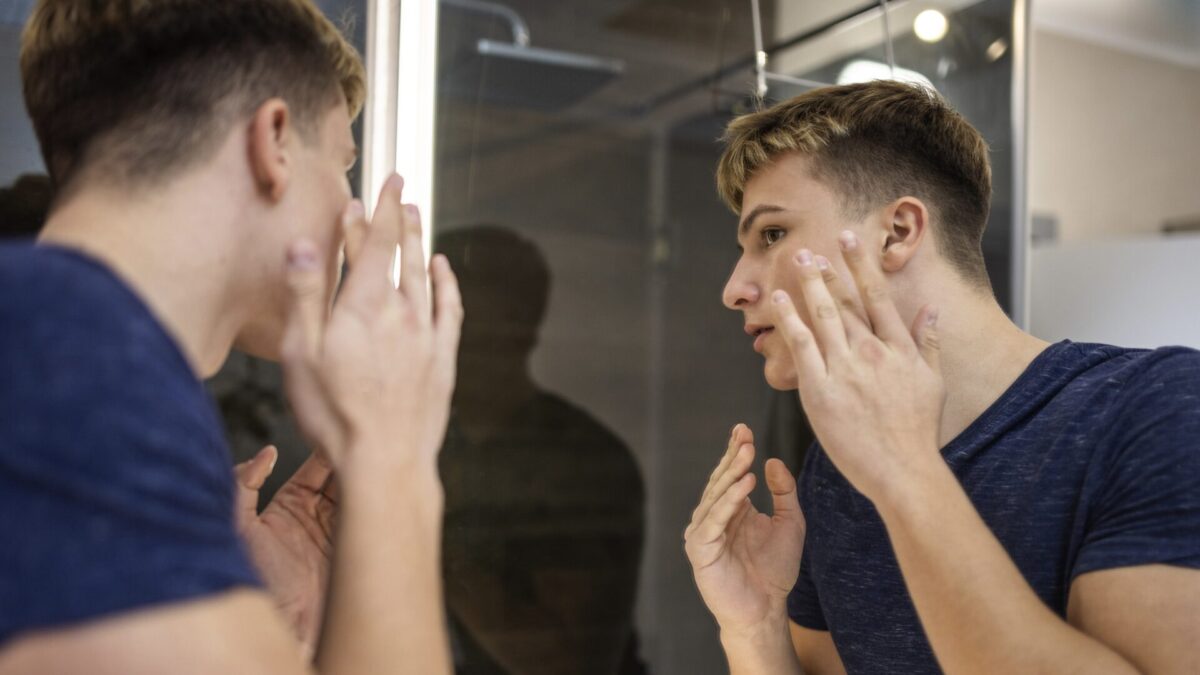
Your son’s interest in looking his best can take a troubling turn when online advice starts treating his growing body like a problem to solve.
“It’s always a good time to ask somebody if you feel like you’re out of your depth and you don’t know how to assess the situation,” child and adolescent psychotherapist Katie Hurley told Parents. Her reassurance offers a useful starting point for families confronting looksmaxxing, an online trend that promises a better appearance but can push boys toward risky choices.
The term covers efforts to improve physical appearance, sometimes through ordinary grooming and sometimes through extreme attempts to change the body. Parents described a world of appearance ratings, rigid expectations about masculinity and influencers presenting themselves as authorities on boys’ development.
A haircut and an obsession are not the same thing. The concern grows when a teen begins measuring his worth against a narrow ideal, or treating strangers’ ratings as instructions for how he should eat, exercise or look.
Krista Fisher, a research fellow at the Movember Institute of Men’s Health, pointed to a shortage of healthy narratives about masculinity. She explained that online communities can offer boys something they genuinely need: somewhere to ask embarrassing questions and feel that they belong.
That helps explain why simply mocking the trend can miss the point. A boy looking for confidence needs someone to take his questions seriously, not another voice telling him that something about him is wrong.
Related: What Parents Should Know About SkinnyTok—and How to Help Their Children
The science also deserves more attention than a confident influencer’s delivery. The American Association of Orthodontists warns that claims about reshaping the jaw through mewing lack supporting research and that improper pressure can disrupt tooth alignment or cause bite problems.
The British Orthodontic Society offers a similar caution about promises that chewing or holding the teeth and tongue in particular positions can change facial shape. Its advice reinforces a simple distinction: a popular appearance hack is not the same as evidence-based care.
Parents do not need to become experts in every new slang term to have a useful conversation. Ask what your son enjoys watching, what advice sounds convincing and whether anything online has made him feel worse about himself.
Listen before launching into a lecture. Hurley suggested pairing difficult conversations with an ordinary activity, such as walking or doing chores, and helping boys recognize strengths that have nothing to do with their appearance.
There is reason to pay attention without assuming that every boy who watches fitness content is in trouble. Movember’s research on young men online surveyed more than 3,000 people ages 16 to 25 in the United States, United Kingdom and Australia, finding that those who watched masculinity influencers were more likely to report worse mental health outcomes.
Those findings describe an association, not proof that an influencer caused a particular child’s difficulties. The study also includes young adults, so its results should not become a sweeping claim about all teenage boys.
When food restriction, excessive exercise or appearance worries begin taking over, seek qualified help rather than trying to diagnose the problem at home. The National Institute of Mental Health explains that eating disorders can affect people of any body weight and that early detection and treatment matter.
A parent’s most important message does not require a perfect explanation of the algorithm: your son is worth knowing, loving and listening to before he changes a single thing about his face.
Read Next: When Workouts Take Over: What Parents Should Know About Bigorexia
Questions or comments? Please write to us here.